
Dialing Within Cary - The Phone Codes You Use
Cary is in the 919/984 overlay, so a local call needs the area code and the seven-digit number. That makes the area code a daily phone code, not just a map label. The leading 1 is separate from the local 10-digit rule; carriers may use it for toll or long-distance handling, but Cary's stable local rule is area code plus number.
| Call Type | Phone Code Format | Example |
|---|---|---|
| Local within Cary | 10-digit: area code + seven-digit number | 919-469-4000 |
| Long distance within the US | 1 + 10-digit number, depending on carrier and toll treatment | 1-919-715-7000 |
| Toll-free | 1 + toll-free prefix + seven digits | 1-800-222-1222 |
| International from a landline | 011 + country code + national number | 011-CC-number |
| Town services | 3-digit N11 code where supported | 311 |
N11 Service Phone Codes Used in Cary
N11 phone codes are short service codes reserved for specific public or carrier functions. Cary's most locally distinctive N11 code is 311, which routes town service questions inside Cary. Outside the town limits, the same service path uses 919-469-4000. Other N11 codes route through state, national, emergency, or carrier systems.
| N11 Phone Code | What It Reaches in Cary |
|---|---|
| 211 | Community services and benefits navigation through North Carolina 211 resources; use web fallback if phone routing fails. |
| 311 | Non-emergency Cary town services; outside town call 919-469-4000, email 311@carync.gov, use the portal, or text 898311. |
| 411 | Carrier directory assistance; fees may apply and results may not match official directories. |
| 511 | Traffic and travel information; use NCDOT road-condition resources for North Carolina travel context. |
| 611 | Your own carrier's repair or customer-service line from many phones. |
| 711 | Telecommunications Relay Service for TTY/relay users. |
| 811 | Call Before You Dig utility-locate requests before excavation. |
| 911 | Emergency police, fire, and EMS; Cary supports text-to-911 when calling is not possible. |
| 988 | Suicide and Crisis Lifeline by call, text, or chat; it is not an area code. |
Vertical Service Star Codes for Cary Lines
Vertical service codes are star codes that trigger a phone-line feature. Support varies by carrier, device, VoIP platform, mobile plan, and feature subscription, so the table should be treated as a common-code reference rather than a promise that every Cary line supports the feature.
| Star Phone Code | Action |
|---|---|
| *57 | Call trace, often used after threatening or harassing calls and sometimes coordinated with law enforcement or the carrier. |
| *60 | Selective call block for specific numbers where supported. |
| *67 | Block caller ID for the next call; may not work for toll-free or emergency calls. |
| *69 | Last-call return, if the carrier supports it. |
| *70 | Disable call waiting for the next call. |
| *72 | Activate call forwarding and then enter the forward-to number. |
| *73 | Cancel call forwarding. |
| *77 | Anonymous call rejection where supported. |
| *82 | Unblock caller ID for one call when the line blocks caller ID by default. |
The Area Phone Codes Serving Cary
Area codes are one category of phone codes. Cary's area phone codes are 919 and 984, and both serve the same local geography. The deeper geographic explanation is on Cary phone area codes; for dialing, the important point is that every Cary local call needs the area code.
- 919 - Cary's historical Triangle-area code, created from 704 in 1954.
- 984 - all-services overlay of 919, implemented in 2012.
- 704 - historical statewide North Carolina code before Cary moved into 919; no longer a Cary code.
Toll-Free Phone Codes
Toll-free prefixes are phone codes where the called party generally pays for the call rather than the caller. They do not identify Cary geography. A Cary resident may dial toll-free codes for utilities, state hotlines, carrier support, banks, hospitals, or national services, but the prefix itself is not evidence that the caller or business is local.
| Toll-Free Phone Code | Meaning |
|---|---|
| 800 | Oldest widely recognized toll-free code. |
| 888 | Toll-free expansion code. |
| 877 | Toll-free expansion code. |
| 866 | Toll-free expansion code. |
| 855 | Toll-free expansion code. |
| 844 | Toll-free expansion code. |
| 833 | Toll-free expansion code. |
Country Code +1 and International Phone Codes
Cary numbers are part of the North American Numbering Plan, so the country code is +1. In a mobile contact list, +1 919 469 4000 style formatting is useful because it works cleanly while roaming and from many international contexts. From a U.S. landline, 011 is the traditional international exit code. On a mobile phone, the plus sign often replaces the exit code.
- From a Cary landline calling abroad: dial 011, then the destination country code, then the national number.
- From a mobile in Cary: dial +, then the country code, then the number.
- From abroad calling Cary: dial the caller's international exit code, then 1, then the 10-digit Cary number.
Local Exchange Phone Codes in Cary
The NXX is the three-digit prefix after the area code. In 919-469-4000, 469 is the NXX. Cary's official directory shows useful local prefix patterns: 469 for many town numbers, 460 for police records and Cary High, 319 for town staff and local institutions, 621 for inspections staff, 653 for police chief and transit coordinator examples, and 984 prefixes such as 282, 326, 327, and 999 for overlay-era official lines.
These phone codes can help identify a likely local context, but they cannot prove who owns the number now. Local number portability, VoIP, mobile movement, and thousands-block pooling all weaken old prefix assumptions. Use NANPA Central Office Code Assignment Records for authoritative assignment data and treat third-party LERG-style tools as technical support.
That distinction matters when a Cary resident receives a call that looks familiar. A 919-469 number might match a public Cary department pattern, but spoofing can make caller ID display a trusted prefix. A 984 prefix might look newer, but the research shows official Cary staff numbers in the overlay. The right use of NXX phone codes is triage: identify the likely numbering context, then verify the exact number on the agency or institution website.
STIR/SHAKEN and the Likely Spam Label
STIR/SHAKEN is the FCC-backed caller-ID authentication framework that helps carriers validate call handoffs between networks. It can support labels such as "Likely Spam" or "Spam Risk," but those labels are not perfect proof. A verified call can still be a scam if the caller uses a real number or social engineering, and a legitimate business number can be mislabeled because of traffic patterns or complaint data.
For Cary numbers, the safest response to a suspicious caller is to hang up and call the official number from carync.gov, WCPSS, WakeMed, NC.gov, the bill, the card, or the court page. Caller ID alone is not enough, especially when spoofed 919 or 984 numbers appear local.
Phone Code Definitions
These definitions separate geographic phone codes, service shortcuts, and carrier feature codes.
- NPA
- Numbering Plan Area - the 3-digit area code at the start of every North American number.
- NXX
- Central office code - the 3 digits after the area code.
- N11
- 3-digit service codes such as 211, 311, 411, 511, 611, 711, 811, 911, and 988.
- Vertical Service Code
- A star plus two-digit code that triggers a call-handling feature.
- Toll-Free Prefix
- An NPA that routes billing to the called party, such as 800, 888, 877, 866, 855, 844, or 833.
- NANP
- North American Numbering Plan - the +1 country-code region covering the United States, Canada, and other participating territories.
How to Look Up a Cary Phone Code
Use NANPA for area codes, NPA reports, central-office code assignment records, and toll-free numbering context. Use FCC consumer guides for 10-digit dialing, 988, call authentication, and complaint routing. For spam or unknown callers, use official complaint portals and approved third-party tools as context, not as proof of identity.
Local phone-code checks should include Cary and North Carolina sources when the code is tied to an actual service. Cary 311 explains town-service routing, Cary's 911 guidance separates emergency, non-emergency, and 311 calls, and North Carolina Public Staff's 919/984 map supports area-code context for the Triangle overlay.
The FTC National Do Not Call Registry is the official consumer channel for registering a number and reporting unwanted telemarketing.
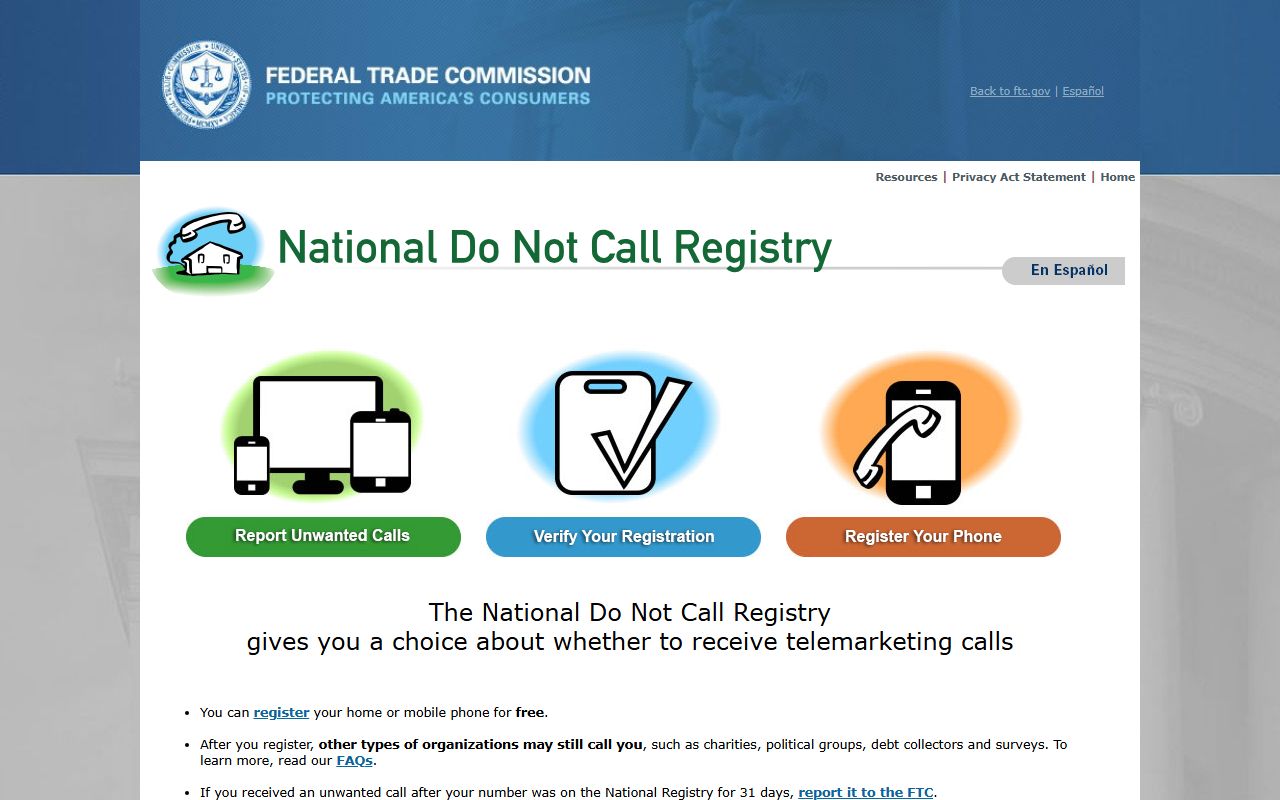
Do Not Call reporting does not verify who owns a Cary number, but it is the proper channel when the problem is unwanted telemarketing or a registry violation.